
Modern businesses capture customer data across 10+ touchpoints: websites, mobile apps, stores, call centers, loyalty programs, partner ecosystems, and more. And each of these systems creates its own version of who the customer is.
But 40-60% of customer records are duplicates or fragmented identities. One person becomes five "customers" in your database. Your metrics inflate. Your attribution breaks. Your CLV calculations measure fiction.
Therefore, identity resolution exists: the process of recognizing, linking, and maintaining a consistent understanding of a real person, household, or account across fragmented data sources—digital and physical, online and offline, anonymous and known.
Identity resolution answers a deceptively simple question:
"Who is this customer, really?"
Without identity resolution, organizations don't just lack clarity. They make confident decisions based on distorted reality.
Identity resolution is the process of assigning a persistent identifier across fragmented records so an organization can recognize the same customer across systems, channels, and time—without collapsing, overwriting, or losing original source data.
Table of Contents
- Why Identity Resolution Exists
- Why Identity Resolution Matters Now
- What Identity Resolution Actually Does
- The Multi-Channel Reality Identity Must Handle
- Identity Resolution vs CDPs, MDM, and "Unification"
- How Identity Resolution Works
- Deterministic vs Probabilistic Identity Matching
- Why Identity Resolution Is Foundational
- Identity Resolution and Customer Lifetime Value (CLV)
- Identity Resolution and Marketing Mix Modeling (MMM)
- Identity Resolution in a Privacy-First World
- Common Identity Resolution Use Cases
- Who Identity Resolution Impacts
- Measuring Identity Resolution Quality
- Implementation Considerations
- Choosing an Identity Resolution Solution
- What Identity Resolution Is Not
- How Truelty Approaches Identity Resolution
- What This Guide Covers
- Frequently Asked Questions
Why Identity Resolution Exists
Modern organizations don't suffer from a lack of data.
They suffer from too much data about the same customer, stored in too many places, under too many identities.
Consider a single customer:
- They browse your website on a work laptop
- Download your mobile app on a personal phone
- Purchase in-store using a credit card
- Call customer support from a different number
- Join your loyalty program with a secondary email
- Interact with multiple brands you own
Without identity resolution, that one human becomes six or more "customers."
This fragmentation leads to:
- Inflated customer counts
- Misleading conversion rates
- Broken attribution
- Distorted CLV calculations
- Inefficient marketing spend
- Poor customer experiences
Identity resolution exists to restore truth.
Why Identity Resolution Matters Now
The urgency around identity resolution has intensified due to three converging forces:
- Signal loss is accelerating. Third-party cookies are deprecated, mobile identifiers are restricted, and privacy regulations are expanding globally.
- Fragmentation is compounding. Organizations now operate across 20+ touchpoints, with customers moving fluidly between digital and physical channels.
- Downstream analytics are breaking. CLV calculations, attribution models, and marketing mix models all inherit identity errors. Bad identity means bad decisions at scale.
- Architectures are shifting. Organizations are moving from monolithic CDPs to composable data stacks. Identity resolution becomes a modular foundation layer that works where your data already lives—not a feature buried inside another vendor's platform.
Without identity resolution, organizations don't just lack clarity. They make confident decisions based on distorted reality.
What Identity Resolution Actually Does

At its core, identity resolution:
- Ingests identifiers: Email, phone, device IDs, cookies, loyalty IDs, account IDs, addresses, CRM keys, and more.
- Evaluates relationships between identifiers: Across time, systems, channels, and confidence levels.
- Assigns a persistent identity anchor: A durable internal identifier that groups related records without deleting or overwriting source data.
- Continuously updates confidence: As new signals arrive, identities strengthen, weaken, or change.
Importantly: Identity resolution does not collapse records into one row.
Instead, it clusters related records around a shared identity reference, preserving lineage, auditability, and context.
The Multi-Channel Reality Identity Must Handle
Identity resolution is not a "digital-only" problem.
It must span:
Digital Channels
- Websites (logged-in and anonymous)
- Mobile apps (iOS, Android, tablets)
- Email platforms and engagement tracking
- Paid media and ad platforms
- Social media interactions
Physical Channels
- Brick-and-mortar POS systems
- Call centers and support tickets
- Events and trade shows
- In-store loyalty scans
- Direct mail responses
Systems of Record
- Multiple CRMs (Salesforce, HubSpot, custom)
- E-commerce platforms (Shopify, Magento, custom)
- Data warehouses (Snowflake, BigQuery, Redshift)
- Marketing clouds (Adobe, Salesforce, Oracle)
- Partner and affiliate feeds
Brand & Business Complexity
- Multi-brand portfolios where customers cross brands
- Regional data silos with different schemas
- Franchise vs corporate ownership structures
- M&A-driven data integration challenges
- B2B2C models with indirect customer relationships
Identity resolution exists because customers don't experience your org chart. Your data does.
Identity Resolution vs CDPs, MDM, and "Unification"

Identity resolution is often confused with adjacent concepts. The distinctions matter.
Identity Resolution vs CDPs
A CDP uses identity resolution. It is not identity resolution itself.
- CDP = activation layer (segmentation, orchestration, delivery)
- Identity resolution = truth layer (who is this person?)
Without strong identity resolution, a CDP simply activates flawed profiles faster. The segments look precise. The orchestration runs smoothly. But the underlying customer definitions are wrong.
Many CDP implementations fail not because of the CDP itself, but because identity resolution was treated as a checkbox rather than a discipline.
Identity Resolution vs Master Data Management (MDM)
MDM focuses on governance and canonical records for known entities.
Identity resolution focuses on recognition and linkage under uncertainty.
| Aspect | MDM | Identity Resolution |
|---|---|---|
| Starting point | Known entities | Unknown/fragmented signals |
| Primary goal | Single source of truth | Recognition across sources |
| Uncertainty handling | Minimal | Core capability |
| Real-time capability | Batch-oriented | Event-driven |
MDM assumes you know who the entity is. Identity resolution operates where identity is fragmented, probabilistic, and evolving.
Identity Resolution vs "Customer Unification"
Unification implies collapsing data into one record. This creates problems:
- Source context is lost
- Audit trails break
- Corrections become destructive
- Analytics lose granularity
- Cross-system reconciliation becomes nearly impossible
Identity resolution takes a different approach:
Each source record remains intact. Identity resolution assigns a shared identity reference that groups related records without destroying context.
This distinction matters for trust, explainability, and analytics accuracy.
How Identity Resolution Works

Identity resolution systems follow a structured flow from raw signals to stable identities.
1. Signal Collection
Identifiers arrive continuously from events, transactions, CRM updates, website behavior, mobile apps, and partners. Each signal carries metadata: timestamp, source system, confidence indicators.
2. Normalization
Raw identifiers are standardized before matching:
- Emails: lowercase, domain validation, alias detection
- Phones: country code normalization, format standardization
- Addresses: postal standardization, geocoding
- Names: case correction, special character handling, nickname mapping
- Devices: fingerprint normalization, bot filtering
Normalization quality directly impacts match accuracy. Garbage in, garbage out.
3. Matching
Normalized signals are compared using deterministic and probabilistic logic. Matching rules define:
- Which identifier pairs can link (email-to-email, device-to-account)
- Confidence thresholds for each match type
- Conflict resolution when signals disagree
4. Graph Construction
Relationships are stored as an identity graph, not flat tables. Graph structures capture:
- Direct links (same email)
- Transitive relationships (A links to B, B links to C)
- Confidence weights on each edge
- Temporal decay of stale connections
- Conflict markers when signals contradict
5. Confidence Scoring
Each link carries metadata:
- Confidence level: How certain is this connection?
- Recency: When was this signal last observed?
- Provenance: Which system provided this data?
- Source reliability: How trustworthy is this data source historically?
- Consent status: Is this linkage privacy-compliant?
- Match type: Was this deterministic or probabilistic?
6. Persistence
A stable identity reference is maintained over time, even as:
- New signals arrive
- Old signals decay
- Identities merge or split
- Consent statuses change
The identity anchor provides continuity for downstream analytics.
Deterministic vs Probabilistic Identity Matching
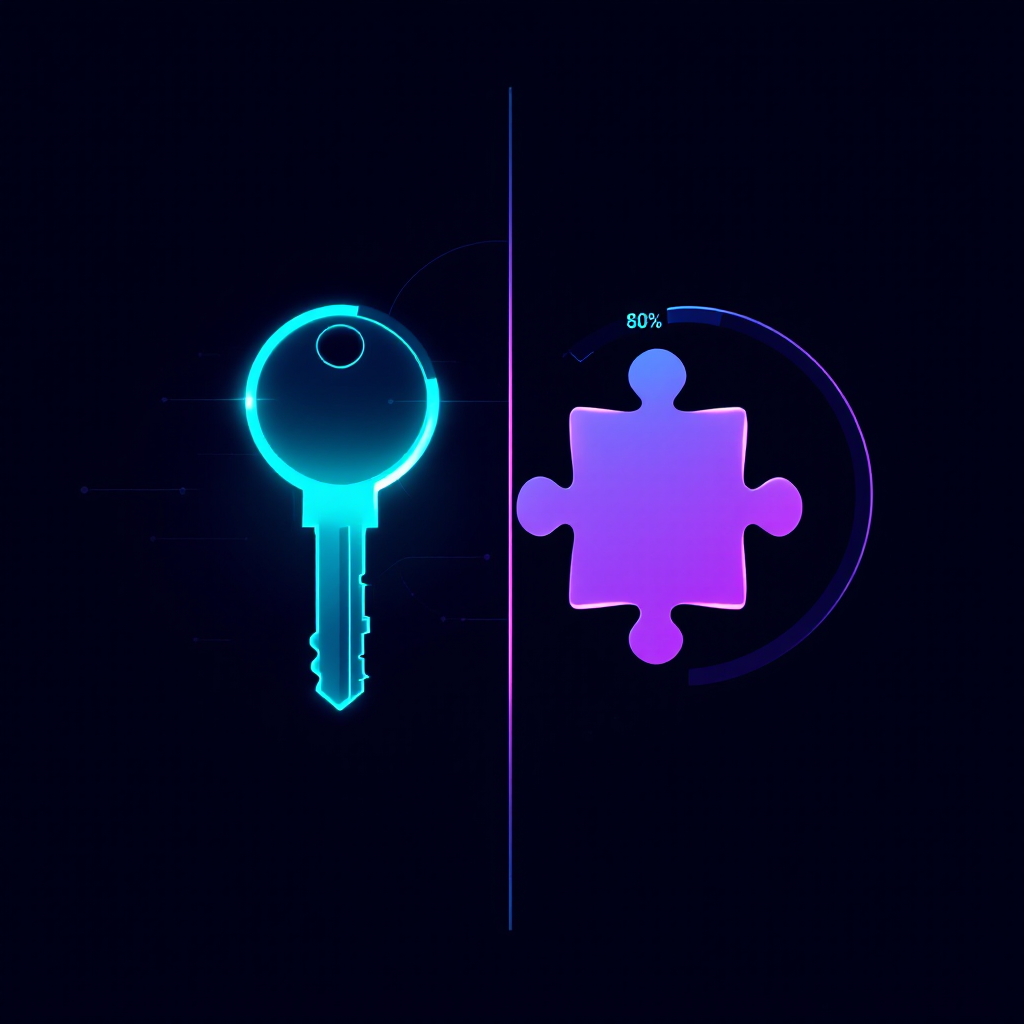
Deterministic Matching
High-confidence, exact matches based on shared identifiers:
- Same email address
- Same loyalty ID
- Same account ID
- Same phone number (normalized)
- Same household address with matching name
Pros: Near-100% accuracy when identifiers match exactly.
Cons: Limited coverage. Most customer journeys lack clean, shared identifiers across all touchpoints.
Deterministic matching alone typically resolves 30-50% of identity relationships. The rest require probabilistic approaches.
Probabilistic Matching
Likelihood-based matches using statistical patterns:
- Device fingerprint + IP + behavioral similarity
- Address + name + household patterns
- Cross-channel temporal proximity (same action within minutes)
- Behavioral clustering (similar purchase patterns, browsing behavior)
- Machine learning pattern recognition across multiple weak signals
Pros: Expands coverage to 70-90% of relationships.
Cons: Requires careful confidence management. False positives can corrupt downstream analytics.
Best Practice: Layered Approach
Modern identity resolution systems use both methods, with transparent scoring. The IAB Tech Lab has developed industry standards for identity management that emphasize this hybrid approach.
- Start with deterministic matches as high-confidence anchors
- Layer probabilistic matches with explicit confidence scores
- Apply different thresholds for different use cases (personalization vs. financial reporting)
- Continuously validate match quality against known outcomes
- Monitor for drift and degradation over time
Why Identity Resolution Is Foundational

Identity resolution is not a downstream enhancement or nice-to-have feature.
It is upstream infrastructure that determines the accuracy of everything built on top of it.
Without Identity Resolution
| Capability | Impact |
|---|---|
| Customer counts | Inflated by 20-40% |
| CLV calculations | Distorted: purchases fragment across identities |
| Attribution models | Broken: touchpoints disconnect from outcomes |
| MMM | Learns from corrupted reach/frequency signals |
| Personalization | Misfires: treats one person as multiple strangers |
| AI/ML models | Hallucinate confidence on flawed training data |
With Identity Resolution
| Capability | Impact |
|---|---|
| Customer counts | Accurate, auditable |
| CLV calculations | Value accrues to correct individuals |
| Attribution models | Touchpoints connect across channels |
| MMM | Learns from de-duplicated reality |
| Personalization | Recognizes returning customers |
| AI/ML models | Train on trustworthy ground truth |
Identity resolution is the root layer of customer intelligence. Every downstream model, report, and decision inherits its accuracy, or its errors.
Want to see what your True Customer Count looks like? Request a Briefing Book assessment →
Identity Resolution and Customer Lifetime Value (CLV)
Customer Lifetime Value depends on one assumption:
That you are measuring the same customer over time.
Without Identity Resolution
- Purchases fragment across identities
- Retention curves break at identity boundaries
- High-value customers appear average (their value is split)
- Churn is misdiagnosed (customer switched channels, not left)
- Cohort analysis produces misleading patterns
With Identity Resolution
- Value accrues correctly to individuals
- Loyalty patterns emerge from unified histories
- CLV becomes predictive, not just retrospective
- Retention investments target the right customers
- Cohort definitions hold across channels
The difference is material. Organizations often discover their "best" customers were actually fragments of their actual best customers, treated as strangers.
Learn more in the Customer Lifetime Value pillar →
Identity Resolution and Marketing Mix Modeling (MMM)
MMM evaluates what drives outcomes at an aggregate level.
But MMM assumes:
- Clean, stable inputs
- Accurate customer counts
- Correct reach and frequency measurements
Identity Fragmentation Corrupts MMM Inputs
| Metric | Without Identity Resolution | Impact on MMM |
|---|---|---|
| Reach | Overstated (duplicates counted) | Underestimates efficiency |
| Frequency | Understated (spread across IDs) | Misses saturation effects |
| Conversions | Attribution breaks | Misallocates credit |
| Customer counts | Inflated | Distorts ROI calculations |
The Fix
Identity resolution de-duplicates reality before MMM learns from it.
When MMM trains on accurate reach, frequency, and conversion data, its recommendations improve. Media mix shifts. Budget allocation changes. The model sees what actually happened, not a fragmented approximation.
Learn more in the Marketing Mix Modeling pillar →
Identity Resolution in a Privacy-First World
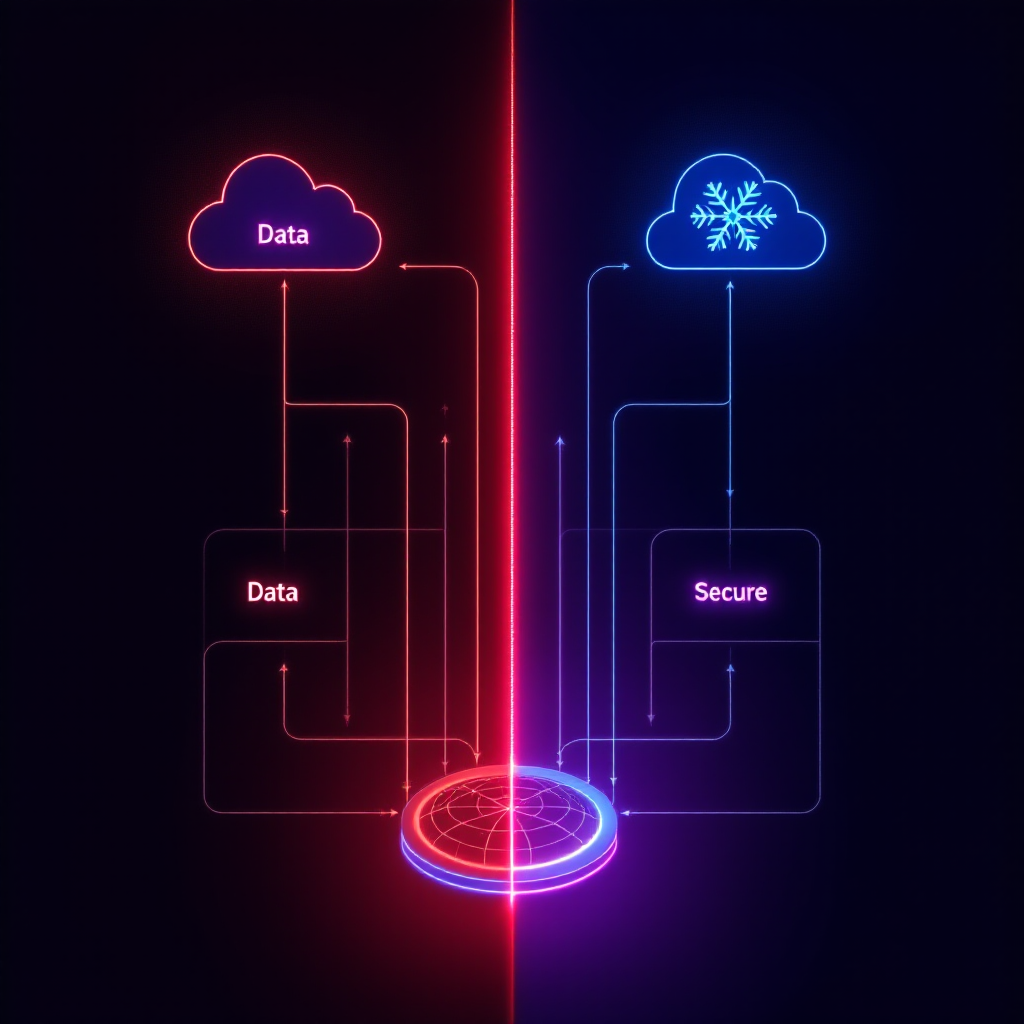
Modern identity resolution must operate within privacy constraints. Organizations need to align with frameworks like GDPR and evolving global privacy regulations:
- First-party data driven: Less reliance on third-party cookies and tracking
- Consent aware: Respect opt-outs and permission boundaries
- Auditable: Explain why identities are linked
- Regionally compliant: GDPR, CCPA, and emerging regulations
- Data minimization: Only collect and link what's actually needed
- Right to deletion: Support surgical removal without corrupting the graph
Why Identity Graphs Outperform Identity Stitching
Traditional "stitching" approaches merge records permanently. This creates compliance risks:
- Hard to honor deletion requests
- Difficult to audit linkage decisions
- Consent changes don't propagate cleanly
Graph-based identity resolution handles privacy better:
| Capability | Stitching | Graph-Based |
|---|---|---|
| Partial visibility | Difficult | Native |
| Consent-scoped joins | Manual | Automatic |
| Confidence decay | Rare | Built-in |
| Deletion requests | Destructive | Surgical |
| Audit trail | Limited | Complete |
Privacy and precision are no longer trade-offs. Graph-native identity resolution supports both.
Common Identity Resolution Use Cases
Marketing & Advertising
- Cross-channel attribution correction: Connect touchpoints that occur across devices and sessions
- Media waste reduction: Stop targeting the same person multiple times
- Suppression accuracy: Ensure existing customers aren't targeted for acquisition campaigns
Analytics & Data Science
- Loyalty analytics: Understand true repeat purchase behavior
- Cohort analysis: Build cohorts that hold across channels
- Predictive modeling: Train models on unified customer histories
Operations & Customer Experience
- Personalization accuracy: Recognize returning customers regardless of entry point
- CRM deduplication: Clean up legacy contact databases
- Support context: Give agents full customer history across channels
Corporate & Finance
- M&A data harmonization: Merge customer bases from acquisitions
- Executive reporting trust: Deliver metrics executives can defend
- Investor metrics: Report accurate customer counts and growth rates
Identity resolution rarely appears in dashboards, but it decides whether dashboards deserve trust.
Who Identity Resolution Impacts
Identity resolution affects different stakeholders in different ways. Understanding these perspectives helps organizations prioritize implementation and measure success.
| Stakeholder | Primary Pain Point | What Identity Resolution Enables |
|---|---|---|
| CMO/Marketing Leaders | Attribution uncertainty, CAC measurement errors | Accurate cross-channel attribution, reduced media waste |
| CDO/Data Leaders | Data governance, audit requirements | Deterministic matching with full lineage, privacy compliance |
| CFO/Finance | Customer count accuracy for investor metrics | True Customer Count (TCC), defensible growth metrics |
| Ops/CX Leaders | Customer recognition across channels | Unified service context, personalization accuracy |
Each stakeholder experiences identity fragmentation differently. Marketing sees broken attribution. Finance sees inflated customer counts. Operations sees customers treated as strangers. Data leaders see governance gaps that create audit risk.
Identity resolution addresses all of these simultaneously because the root cause is the same: fragmented customer identity.
Measuring Identity Resolution Quality
A mature identity resolution program tracks more than match counts.
Key Metrics
| Metric | Definition | Target |
|---|---|---|
| Identity Match Rate | % of records linked to a unified identity | >85% |
| Duplicate Rate | % of identities that are actually duplicates | <5% |
| False Positive Rate | % of links that incorrectly connect different people | <2% |
| Cross-Channel Coverage | % of identities with signals from 2+ channels | >60% |
| Identity Confidence Index | Weighted average confidence across all links | >0.8 |
| Consent Coverage | % of identities with valid consent status | 100% |
| Graph Freshness | Time since last identity graph update | <24 hours |
Validation Approaches
- Holdout testing: Compare identity-resolved metrics against known ground truth
- A/B testing: Measure downstream impact of identity resolution improvements
- Manual sampling: Human review of match decisions at confidence boundaries
- Drift monitoring: Track metric changes that might indicate identity quality degradation
Implementation Considerations

Build vs Buy
Building identity resolution in-house requires:
- Matching algorithm development: Deterministic rules plus probabilistic models
- Graph infrastructure: Storage and query systems optimized for relationship traversal
- Ongoing data quality management: Continuous monitoring and correction
- Governance infrastructure: Thresholds, review processes, escalation paths
- Privacy compliance systems: Consent tracking, opt-out propagation, deletion handling
Most organizations underestimate this complexity by 3-5x.
Timeline Expectations
| Phase | Duration | Focus |
|---|---|---|
| Assessment | 2-4 weeks | Data audit, identifier inventory, quality baseline |
| Design | 2-4 weeks | Matching rules, confidence thresholds, governance model |
| Implementation | 4-8 weeks | Core matching, initial graph build, validation |
| Optimization | Ongoing | Coverage expansion, accuracy tuning, monitoring |
Data Residency Considerations
Traditional identity resolution platforms require extracting your data to external systems. This creates:
- Security exposure during transit and at rest
- Compliance complexity (GDPR, CCPA, industry regulations)
- Legal overhead (data processing agreements, liability insurance)
- Latency from batch shipping and daily snapshots
Snowflake-native approaches like Truelty eliminate these concerns entirely. Your data never leaves your Snowflake instance. Resolution runs where your data already lives.
Choosing an Identity Resolution Solution
When evaluating identity resolution vendors or approaches, consider these criteria:
1. Matching Accuracy Requirements
What balance of deterministic vs. probabilistic matching does your use case require? Financial reporting may demand near-100% deterministic accuracy. Marketing personalization may accept probabilistic matches with confidence scores.
2. Data Residency & Security
Where does data processing happen? Traditional solutions extract data to external processors. This creates security exposure, compliance complexity, and latency. Snowflake-native solutions keep data in your environment.
3. Real-Time vs. Batch
Does your use case require event-driven resolution (personalization at the moment of interaction) or is batch processing sufficient (daily reporting, campaign planning)?
4. Integration Architecture
Does the solution work with your existing data warehouse? Or does it require a parallel data infrastructure? Composable solutions that operate where your data already lives reduce complexity and maintenance burden.
5. Governance & Auditability
Can you explain why two identities are linked? Full lineage and explainability are essential for compliance, debugging, and organizational trust. Black-box matching creates risk.
6. Cost Model
Per-record pricing scales unpredictably as customer data grows. Flat licensing provides budget predictability. Understand the total cost of ownership, including data movement, compute, and maintenance.
What Identity Resolution Is Not
Common misconceptions:
- A one-time project. Identity resolution requires continuous maintenance as data evolves.
- A static ruleset. Matching logic must adapt to new channels, identifiers, and patterns.
- A simple join. SQL joins don't handle confidence, decay, or graph traversal.
- A marketing feature. Identity impacts finance, operations, analytics, and executive reporting.
- A CDP replacement. CDPs need identity resolution; they don't provide it.
Identity resolution is a living system that requires ongoing investment.
How Truelty Approaches Identity Resolution
Truelty is a 1st-party identity resolution engine that runs entirely within your Snowflake instance. Your data never leaves your environment.
Code as a Service
Unlike traditional IDR vendors that charge per-record and require shipping data to external processors, Truelty operates as code that runs in your Snowflake:
| Traditional 3rd Party IDR | Truelty |
|---|---|
| Data shipped externally | Data stays in your Snowflake |
| Extensive legal agreements | Zero trust model: no data access |
| Daily batch snapshots | Run on your schedule, real-time capable |
| Per-record pricing | Flat licensing, unlimited records |
Zero Trust Architecture
Truelty's control plane sees only operational metadata: table names, column counts, processing status. It never accesses your actual customer data. All identity resolution computation happens inside your Snowflake instance using your compute credits.
Semantic Categories
During onboarding, Truelty automatically scans source tables and detects identifiable semantic categories:
- Email addresses
- Phone numbers
- US street addresses
- Names (with nickname mapping)
- Loyalty IDs, account IDs
- VINs and other industry-specific identifiers
Columns that aren't auto-detected can be manually mapped. This semantic layer powers the matching logic without requiring custom configuration for every field.
Stripe, Stack & Score Methodology
Truelty's matching engine uses a multi-pass approach:
- Tokenize and Sequence: Each source record receives a Truelty ID
- Stripe, Stack & Score: Identifiers are normalized and scored by semantic category
- Compute Pairs: Potential matches are identified across semantic categories
- Chain Scoring: Multi-pass resolution strengthens or weakens connections across the graph
This produces resolved identities: persistent Truelty IDs that link related source records without merging or destroying them.
The Truelty ID
Each resolved identity receives a Truelty ID (e.g., 101.115.055.307), a persistent anchor that:
- Groups related source records without merging them
- Links across semantic categories (same phone + different email = same person)
- Maintains full lineage to original source records
- Survives schema changes and system migrations
Performance
Truelty is optimized for Snowflake's architecture:
- 90% of processing runs on XSmall warehouses
- Hyper-packing: Up to 3 million records per micro-partition
- Async processing: Leverages Snowflake's asynchronous execution
Advanced Configuration
For organizations with specific requirements, Truelty supports deeper customization:
- Semantic Category Customization: Beyond auto-detection, map custom identifier types (VINs, product serial numbers, industry-specific IDs) to matching rules
- Matching Rule Governance: Configure confidence thresholds, set minimum match criteria, define policies for different use cases (financial reporting vs. marketing activation)
- Graph Traversal Controls: Set chain depth limits to prevent over-linking, configure temporal decay settings for stale connections
- Collision Handling: Define resolution policies when signals conflict (e.g., same email linked to two different phone numbers)
These controls enable organizations to balance coverage against precision based on their specific regulatory and operational requirements.
Getting Started
Prerequisites:
- Snowflake Enterprise edition or higher
- Data loaded into Snowflake
Setup takes approximately one hour. Truelty creates a segregated processing zone that avoids conflicts with existing databases and schemas.
What This Guide Covers
This article focuses specifically on identity resolution: the foundational process of recognizing customers across fragmented data. Identity resolution is the first pillar of trustworthy customer intelligence.
In subsequent articles, we explore:
- Customer Lifetime Value (CLV): How resolved identity enables accurate value measurement
- Marketing Mix Modeling (MMM): How identity de-duplication improves media optimization
Frequently Asked Questions
What is identity resolution in simple terms?
Identity resolution connects different data points that belong to the same real-world customer so businesses can understand who they are interacting with across channels and time.
Why is identity resolution important?
Because without it, customer metrics, attribution, CLV, and personalization are fundamentally inaccurate. Organizations make decisions based on fragmented, duplicated views of their customers.
Is identity resolution only for marketing?
No. It impacts finance (accurate customer counts), analytics (reliable cohorts), operations (personalized service), CX (recognition across channels), and executive decision-making (trustworthy metrics).
How is identity resolution different from data unification?
Unification merges records into one, destroying source context. Identity resolution links records while preserving their original context, enabling audit trails and more accurate analytics.
Does identity resolution work without cookies?
Yes. Modern identity resolution relies on first-party identifiers (email, phone, account IDs, loyalty numbers) and consented signals rather than third-party cookies.
How accurate is identity resolution?
Deterministic matching achieves near-100% accuracy for exact identifier matches. Probabilistic matching typically achieves 85-95% accuracy. Best-in-class systems combine both and assign confidence scores rather than binary match decisions.
How long does identity resolution take to implement?
Initial implementation typically takes 8-16 weeks. However, identity resolution is an ongoing program. Expect continuous optimization as data sources change and requirements evolve.
Start With Identity
Before investing in attribution models, personalization engines, or predictive analytics, ensure your foundation is solid. Every downstream capability depends on knowing who your customers actually are.
Identity resolution isn't just a data project. It's the prerequisite for trustworthy customer intelligence.
Learn how Truelty approaches identity resolution →
Get a Briefing Book assessment of your customer data →
See identity resolution in action →

Truelty Team
Building the Insight Operating System
